## Edge Computing + Jamstack. Is it the future of the Internet?
Note:
* I apologize for the clickbait title.
* Maybe wrods "the future of the Internet" do sound too strong for my talk.
* Especially with all the hype around Web3 concepts such as Blockhain and AI.
* But I just wanted to share with you some trends that I see in the industry and showcase some of the technologies that I've been playing with at my spare time to build sydjango.org website.
* I want to start my talk by making a prediction.
__640K of RAM ought to be enough for anybody__
Note:
- No that's not my prediction.
__640K [of RAM] ought to be enough for anybody__
__(© Bill Gates, 1981)__
Note:
- This is what Bill Gates said in 1981.
- I have a lot of respect to Gates, in my opinion he is one of the best tech visioners of all times.
- So if wasn't afraid to make mistakes, I shouldn't be afraid it too.
### My prediction
At least 50% of all web applications in the world will be completely hosted on edge infrastructure by 2034.
Note:
* So my predictions is...
* And hopefull by the end of this talk you can you can see what makes me to say this.
### What is Edge Computing?
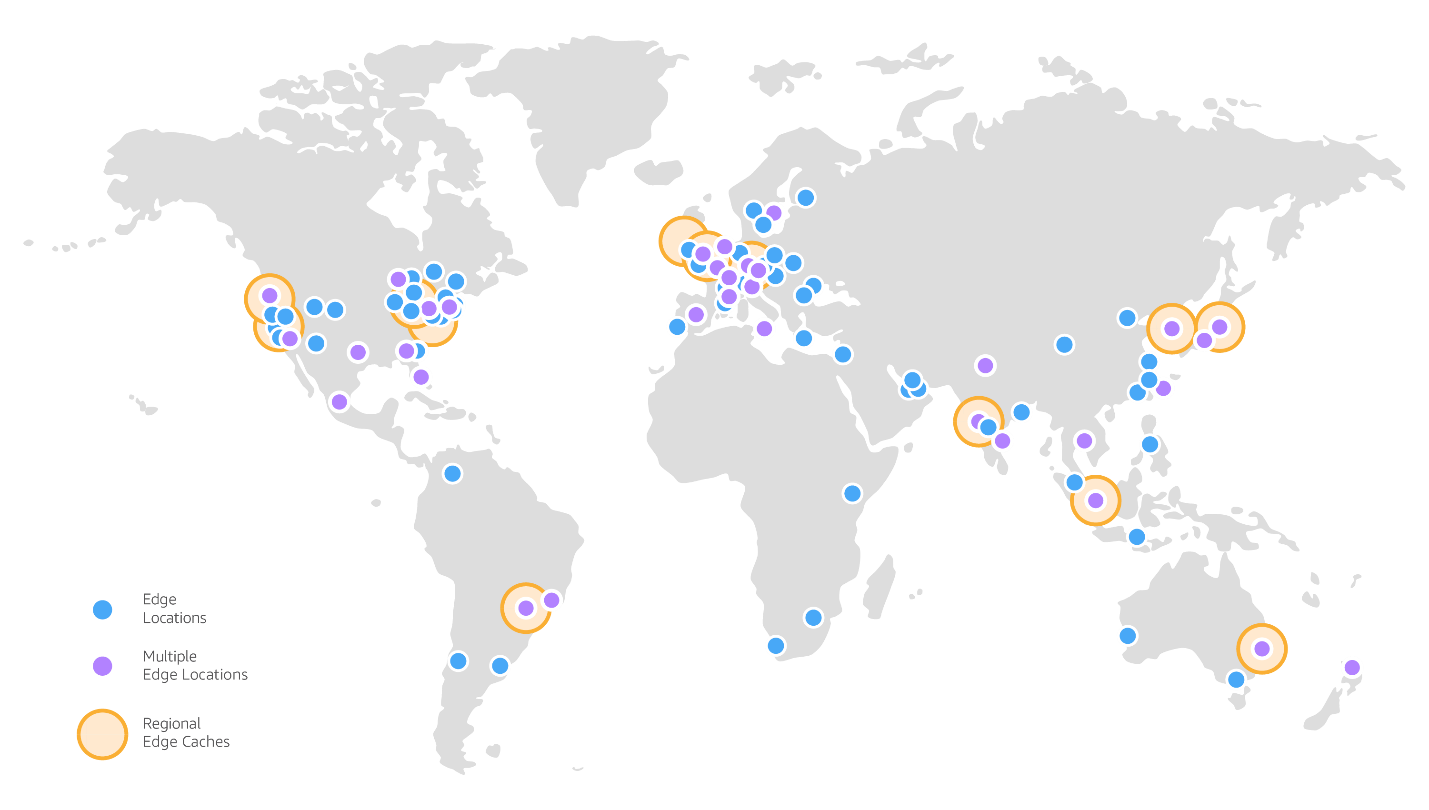
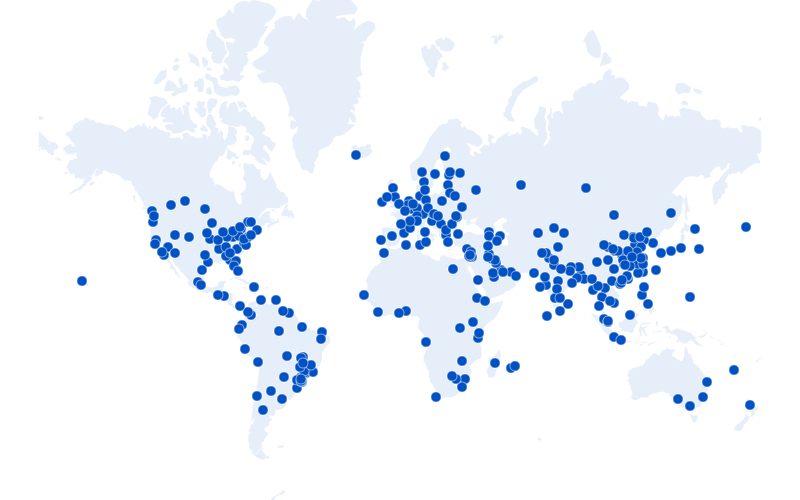
- **Late 90s.** CDNs are invented to solve fundamental problem of the Internet - network latency and traffic congestion.
- **Late 2000s.** CDNs started offering other services, e.g. media streaming, image optimization, etc
- **Late 2010s.** Advanced services, DDoS protection, WAF, Edge Computing (Cloudflare Workers 2017).
Note:
- In the most generic form this is any design that brings compute operations physically closer to user.
- But today we will be talking about Edge Servers computing. And it all started with CDNs.
- Fisrt CDNs were invented in late 90s to solve the fundamental problem of the Internet - traffic congestion and network latency.
- Early CDNs were able to store only static content, e.g. html, css, images.
- But over time CDN providers added more features, e.g. automatic image conversion, protocol upgrades, video streaming, etc.
- In the end of last decade CDNs started playing even larger role in the modern Internet infrastructure.
- CDN providrs started offering advanced solutions that not only allowed to achieve better performance, but also enhance security,
- These services solutions included DDoS protection, Web Application Firewalls, etc.
- Finally at some stage CDNs started offering even more services allowing to place workloads in the edge, that pradigm became known as Edge Computing.
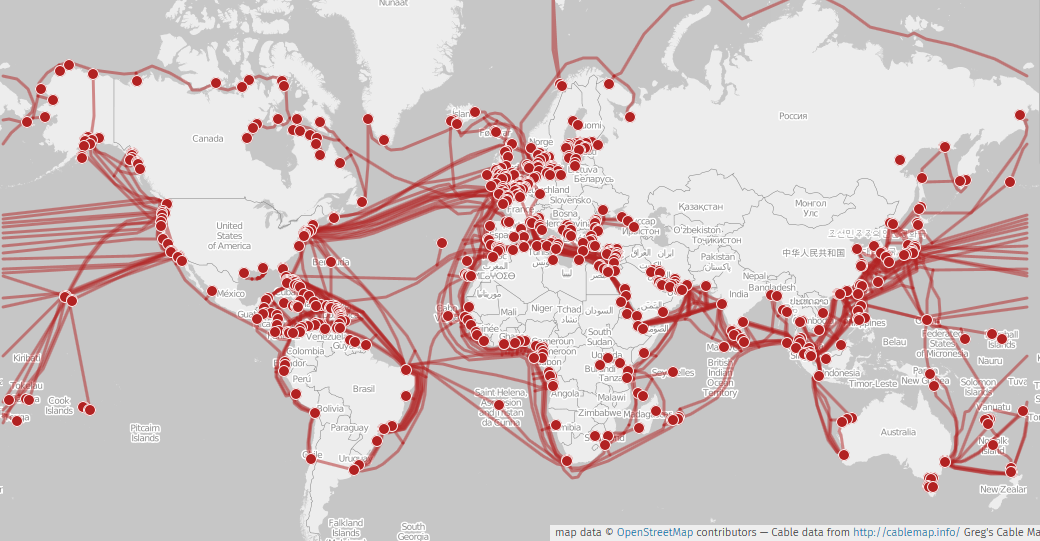
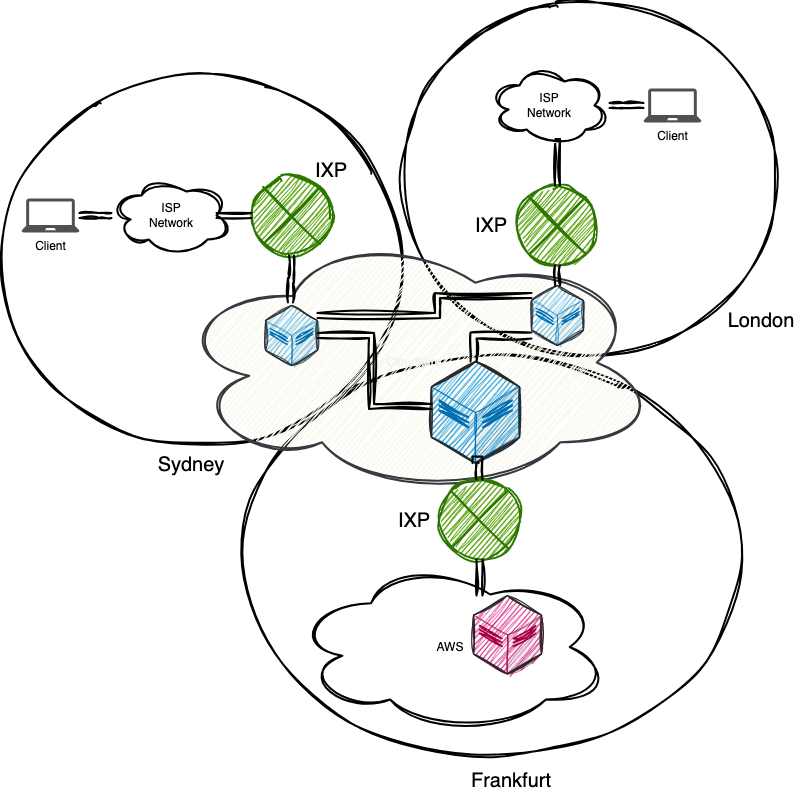
- Let's have a close look at CDNs to understand how it works and what the benefits are.
![]()
![]()
![]()
![]()
![]() ### What else can be hosted in the Edge?
* DNS (1.1.1.1)
* VPN (Zero Trust)
* [NEW!] Apps & App Services
* [NEW!] Databases
Note:
- But technically it is possible to host any software in the Edge.
- Let's take DNS for example.
- offers a DNS resolver 1.1.1.1 that works 30% faster than the 8.8.8.8 provided by Google.
- All because Cloudflare hosts it inside their Anycast Edge Network.
- It also compliments well CDN and other services that Cloudflare offers.
- Another example of a service that can be hosted in the Edge is VPN.
- Cloudflare's VP is branded Zero Trust and also hosted on their Edge Network.
- Our engineers in US know that before we switched from self-hosted VPN to Zero Trust, accessing GitLab from US was much slower.
- The reason for this is that we used a VPN service that was hosted in Europe and GitLab is hosted in Australia.
- It caused traffic from US to Asutralia to travel via Europe. As you can imagine it's much much much slower than connecting directly from US to Asutralia.
- Finally, CDNs became offering customers PaaS for hosting custom applications in the edge.
- I originally didn't take it seriously as it only allowed to run a JS function in the Edge Server, adn this is for example how Akamai Ege Computing still works.
- But I cahnged my mind once I started seeign that Cloudflare also started offering databases as a service and many other application services along with the Applicaiton platform.
- I will show you in a bit how it works on the example of sydjango.org website, but before I do this...
### Jamstack (https://jamstack.org/)
* Static Site Generators: Jekyll (2008), Gatsby, Hugo, etc
* Single Page Applications: React (2013), Vue, etc
* Server Side Rendering: Next.js (2016), Astro, etc
* Headless CMS: Contentful (2013), Strapi, etc
Note:
- Let me speak a little bit about what happened with web development during this time.
- As CDNs grew in popularity, a new type of software emerged, the name that stuck was "Static Site Generators".
- One of the first SSG was Jekyll originally created in 2008.
- The idea is quite simple - it allows users to build the entire website from templates stored in a VCS (usually Git) and combine it with soem data coming from different data providers, files, APIs, Dtaabases, etc.
- Of course, such static websites would would work extremely fast and reliable when distributed via CDN. It's actually a great choice for some types of websites, e.g. product catalogues, blogs, company websites, etc.
- But, there was a couple of problems using this approach.
- First. Is dynamic functionality. We can create a static blog which makes it super fast to read the conent, but wat to do with comments?
- Second. Build time. For a very large websites, build time could be quite large too.
- So in parallel we observed a rapid growth of popularity of Javascript UI frameworks such as React JS and Vue.
- We use both these frameworks at CG as they allow fast development of complex fronted applications with reach functionality.
- At some stage developers started buildign the entire website logic including routing, etc inside the frontend aplpicaiton. This approach received name "SPA".
- Ans though it caused JS bloat and was causing the initial load time inrease this approach became quite popular.
- Thanks to JS bloat more recently we were able to observe somewhat renaissance of classic Server Side Rendering approach.
- Over time Static Site Generators evolved, mingled with JavaScript Web Frameworks and Headless CMS's and created a new web development paradigm that received name Jamstack.
- Unfortunately, if you open the https://jamstack.org/ website and read the Jamstack definition, it will be hard to understand what it's about.
- So let me try to explain it in my words.
- JAM in Jamstack stands for Javascript, API and Markup. In this paradigm the HTML markup is generated by SSG and the dynamic functionality is added through APIs and Javascript.
- Such approach allows websites to receive benefits of being hosted and distributed globally via CDNs while still keeping reach functionality thansk to the use of APIs.
- In the next section I will do a qaick demo of a website that I built that uses this approach.
### Building blocks
- [Astro](https://astro.build/) website hosted on [Cloudflare Pages](https://pages.cloudflare.com/)
- [Hono](https://hono.dev/) or ([itty-router-openapi](https://cloudflare.github.io/itty-router-openapi/)) API hosted on [CloudFlare Workers](https://workers.cloudflare.com/)
- [Cloudflare KV](https://developers.cloudflare.com/kv/)
- [Wrangler](https://developers.cloudflare.com/workers/wrangler/) and [Miniflare](https://miniflare.dev/) for local development.
Note:
- Why Astro? It's a new generation Jamstack framework (cannot call it a static site generator anymore or a web framework). It is very fast.
- It introduces the concept of page islands allowing us to render us static HTML on thee server for parts of the webpagge and hydrate only some compentns in the client.
- It even allws you mixing Vue and React components in one page, if needed.
- It plays very nicely with Cloudflare and allows both deployment via Cloduflare Workers and Cloduflare Pages.
- Hono is a Typescript web framework for Edge, it's very fast and has pretty much Zero bootstrap time.
- Unfortunately, I don't have workign example of how I used Hone in SyDjango, but I played with it separately and it looks pretty good.
- Alternative you can also use `itty-router-openapi` a web framework provided by Cloudflare itself, it's a design first approach to API development.
- Cloudflare KV storage is a simple KV store, very easy to work with. I use it to store the Website data, user sessions, etc.
- Wrangler is a CLI tool provided by Cloudflare that allows working with Cloudflare resources. Very easy to use.
- Cloudflare Pages integrates natively with GitHub and provides automatic CI/CD builds and such features as preview branches.
### Demo
* [Astro](https://github.com/tyomo4ka/sydjango.org/blob/master/sydjango/src/pages/login/index.astro)
* [Hono](https://github.com/city2code/jobspp-cloudflare/blob/main/apps/techtalks/src/index.ts)
* [Pages Dashboard](https://dash.cloudflare.com/ba18c044eb78e85c4c95cd8e4b7bc0a5/pages/view/sydjango-org)
* [Workers Dashboard](https://dash.cloudflare.com/ba18c044eb78e85c4c95cd8e4b7bc0a5/workers/services/view/sydjango-crons/production)
* [Analytics Engine - Push Data Point](https://gitlab.covergenius.biz/cg/apipulse-proxy/-/blob/master/src/index.ts?ref_type=heads#L114)
* [Analytics Engine - Query Data](https://gitlab.covergenius.biz/cg/apipulse-portal/-/blob/master/functions/api/stats.js?ref_type=heads#L13)
* [Email Workers](https://github.com/tyomo4ka/sydjango.org/blob/d211ab72bde29a28df1ef585924c1d2d0c76acae/in-at-sydjango-org/src/index.ts)
## Why I like this solution?
* Price
* Simplictiy
* Rich funcionality
Notes:
* Price. 10 million requests included for $5/mo. +$0.30 per additional million.
* Minimum traffic between countries and continents and serverless model based on V8 Isolates makes resource utilization very efficient.
## Problems
* Vendor lock (partially solved by using Hono and Astro).
* Maturity (many services are still in beta).
* Lack of enterprise-level security controls.
* Other limitation typical for serverless technologies.
## Is it the future of Internet?
Note:
* So, coming back to the topic of my talk. Is Edge Computing and Jamstack the future of Internet?
* The honest answer is - I don't know.
* As bare minimum - I think it deserves our attention and deep consideration.
### What else can be hosted in the Edge?
* DNS (1.1.1.1)
* VPN (Zero Trust)
* [NEW!] Apps & App Services
* [NEW!] Databases
Note:
- But technically it is possible to host any software in the Edge.
- Let's take DNS for example.
- offers a DNS resolver 1.1.1.1 that works 30% faster than the 8.8.8.8 provided by Google.
- All because Cloudflare hosts it inside their Anycast Edge Network.
- It also compliments well CDN and other services that Cloudflare offers.
- Another example of a service that can be hosted in the Edge is VPN.
- Cloudflare's VP is branded Zero Trust and also hosted on their Edge Network.
- Our engineers in US know that before we switched from self-hosted VPN to Zero Trust, accessing GitLab from US was much slower.
- The reason for this is that we used a VPN service that was hosted in Europe and GitLab is hosted in Australia.
- It caused traffic from US to Asutralia to travel via Europe. As you can imagine it's much much much slower than connecting directly from US to Asutralia.
- Finally, CDNs became offering customers PaaS for hosting custom applications in the edge.
- I originally didn't take it seriously as it only allowed to run a JS function in the Edge Server, adn this is for example how Akamai Ege Computing still works.
- But I cahnged my mind once I started seeign that Cloudflare also started offering databases as a service and many other application services along with the Applicaiton platform.
- I will show you in a bit how it works on the example of sydjango.org website, but before I do this...
### Jamstack (https://jamstack.org/)
* Static Site Generators: Jekyll (2008), Gatsby, Hugo, etc
* Single Page Applications: React (2013), Vue, etc
* Server Side Rendering: Next.js (2016), Astro, etc
* Headless CMS: Contentful (2013), Strapi, etc
Note:
- Let me speak a little bit about what happened with web development during this time.
- As CDNs grew in popularity, a new type of software emerged, the name that stuck was "Static Site Generators".
- One of the first SSG was Jekyll originally created in 2008.
- The idea is quite simple - it allows users to build the entire website from templates stored in a VCS (usually Git) and combine it with soem data coming from different data providers, files, APIs, Dtaabases, etc.
- Of course, such static websites would would work extremely fast and reliable when distributed via CDN. It's actually a great choice for some types of websites, e.g. product catalogues, blogs, company websites, etc.
- But, there was a couple of problems using this approach.
- First. Is dynamic functionality. We can create a static blog which makes it super fast to read the conent, but wat to do with comments?
- Second. Build time. For a very large websites, build time could be quite large too.
- So in parallel we observed a rapid growth of popularity of Javascript UI frameworks such as React JS and Vue.
- We use both these frameworks at CG as they allow fast development of complex fronted applications with reach functionality.
- At some stage developers started buildign the entire website logic including routing, etc inside the frontend aplpicaiton. This approach received name "SPA".
- Ans though it caused JS bloat and was causing the initial load time inrease this approach became quite popular.
- Thanks to JS bloat more recently we were able to observe somewhat renaissance of classic Server Side Rendering approach.
- Over time Static Site Generators evolved, mingled with JavaScript Web Frameworks and Headless CMS's and created a new web development paradigm that received name Jamstack.
- Unfortunately, if you open the https://jamstack.org/ website and read the Jamstack definition, it will be hard to understand what it's about.
- So let me try to explain it in my words.
- JAM in Jamstack stands for Javascript, API and Markup. In this paradigm the HTML markup is generated by SSG and the dynamic functionality is added through APIs and Javascript.
- Such approach allows websites to receive benefits of being hosted and distributed globally via CDNs while still keeping reach functionality thansk to the use of APIs.
- In the next section I will do a qaick demo of a website that I built that uses this approach.
### Building blocks
- [Astro](https://astro.build/) website hosted on [Cloudflare Pages](https://pages.cloudflare.com/)
- [Hono](https://hono.dev/) or ([itty-router-openapi](https://cloudflare.github.io/itty-router-openapi/)) API hosted on [CloudFlare Workers](https://workers.cloudflare.com/)
- [Cloudflare KV](https://developers.cloudflare.com/kv/)
- [Wrangler](https://developers.cloudflare.com/workers/wrangler/) and [Miniflare](https://miniflare.dev/) for local development.
Note:
- Why Astro? It's a new generation Jamstack framework (cannot call it a static site generator anymore or a web framework). It is very fast.
- It introduces the concept of page islands allowing us to render us static HTML on thee server for parts of the webpagge and hydrate only some compentns in the client.
- It even allws you mixing Vue and React components in one page, if needed.
- It plays very nicely with Cloudflare and allows both deployment via Cloduflare Workers and Cloduflare Pages.
- Hono is a Typescript web framework for Edge, it's very fast and has pretty much Zero bootstrap time.
- Unfortunately, I don't have workign example of how I used Hone in SyDjango, but I played with it separately and it looks pretty good.
- Alternative you can also use `itty-router-openapi` a web framework provided by Cloudflare itself, it's a design first approach to API development.
- Cloudflare KV storage is a simple KV store, very easy to work with. I use it to store the Website data, user sessions, etc.
- Wrangler is a CLI tool provided by Cloudflare that allows working with Cloudflare resources. Very easy to use.
- Cloudflare Pages integrates natively with GitHub and provides automatic CI/CD builds and such features as preview branches.
### Demo
* [Astro](https://github.com/tyomo4ka/sydjango.org/blob/master/sydjango/src/pages/login/index.astro)
* [Hono](https://github.com/city2code/jobspp-cloudflare/blob/main/apps/techtalks/src/index.ts)
* [Pages Dashboard](https://dash.cloudflare.com/ba18c044eb78e85c4c95cd8e4b7bc0a5/pages/view/sydjango-org)
* [Workers Dashboard](https://dash.cloudflare.com/ba18c044eb78e85c4c95cd8e4b7bc0a5/workers/services/view/sydjango-crons/production)
* [Analytics Engine - Push Data Point](https://gitlab.covergenius.biz/cg/apipulse-proxy/-/blob/master/src/index.ts?ref_type=heads#L114)
* [Analytics Engine - Query Data](https://gitlab.covergenius.biz/cg/apipulse-portal/-/blob/master/functions/api/stats.js?ref_type=heads#L13)
* [Email Workers](https://github.com/tyomo4ka/sydjango.org/blob/d211ab72bde29a28df1ef585924c1d2d0c76acae/in-at-sydjango-org/src/index.ts)
## Why I like this solution?
* Price
* Simplictiy
* Rich funcionality
Notes:
* Price. 10 million requests included for $5/mo. +$0.30 per additional million.
* Minimum traffic between countries and continents and serverless model based on V8 Isolates makes resource utilization very efficient.
## Problems
* Vendor lock (partially solved by using Hono and Astro).
* Maturity (many services are still in beta).
* Lack of enterprise-level security controls.
* Other limitation typical for serverless technologies.
## Is it the future of Internet?
Note:
* So, coming back to the topic of my talk. Is Edge Computing and Jamstack the future of Internet?
* The honest answer is - I don't know.
* As bare minimum - I think it deserves our attention and deep consideration.
![]() ### Thanks for your time!
### Thanks for your time!